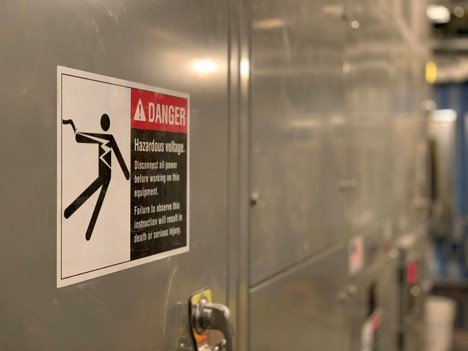
Why businesses in every industry should pay attention to a recent court ruling
A recent judgment of the Court of Appeal of Arnhem-Leeuwarden in the Netherlands, dated October 13, 2026 (ECLI:NL:GHARL:2026:6622), provides an important reminder for businesses across virtually every industry: having written rules, warnings, disclaimers or safety instructions does not necessarily protect a business against liability.
What matters is not only what a business communicates on paper, but also what it actually does in practice.
What happened?
The case involved an experienced skier who suffered serious brain injuries after falling during a lesson at an indoor ski facility.
The facility’s general terms and conditions advised adult skiers to wear a helmet. The participant was aware of this advice but chose not to wear one. The facility argued that the participant had voluntarily accepted the risks involved and that it had fulfilled its obligations by providing appropriate equipment, professional supervision and written safety advice.
The Court of Appeal disagreed.
Although the facility had included a helmet recommendation in its general terms and conditions, it had failed to actively promote compliance with that recommendation. There were no additional warnings at the facility, instructors did not encourage participants to wear helmets, and helmets were not available for participants to borrow or rent.
The Court concluded that the facility had breached its contractual duty of care and was liable for the participant’s injuries.
Importantly, the Court also rejected the argument that the participant should bear part of the responsibility because he had voluntarily participated in the activity and had chosen not to wear a helmet.
Why is this relevant to your business?
Although the judgment concerned an indoor ski facility, the underlying principle extends well beyond sports and recreational activities.
Every business has responsibilities arising from the nature of its operations, the services it provides and the risks that can reasonably be anticipated.
Consider the following examples:
- Hotels, resorts and restaurants: Displaying warnings about slippery floors, swimming pools, stairs or other hazards may not be sufficient if reasonable preventive measures are not actually implemented.
- Construction and industrial businesses: Written safety procedures and requirements to wear protective equipment may offer limited protection if employees, contractors or visitors are routinely allowed to disregard them.
- Offices and professional service providers: Internal policies addressing workplace safety, access to restricted areas, equipment, emergency procedures or visitor protection must be reflected in actual workplace practices.
- Retail businesses and shopping centers: Warning signs do not necessarily eliminate liability where management fails to address known hazards or take reasonable steps to prevent foreseeable accidents.
- Healthcare and wellness facilities: Written instructions, consent forms and safety protocols do not automatically replace the obligation to take appropriate precautions and ensure that applicable procedures are followed.
- Transportation, logistics and warehousing: Written operating procedures may be insufficient where foreseeable risks are not adequately addressed through training, supervision and practical safeguards.
The same principle can be relevant to ordinary office environments. For example, an employer may have detailed emergency evacuation procedures, but if employees have never received instructions, emergency exits are obstructed or evacuation procedures are not implemented, the existence of a written policy alone may provide little protection.
The important distinction: Having a policy is not the same as implementing it.
The judgment highlights a distinction that businesses sometimes overlook.
A company may have comprehensive general terms and conditions, internal regulations, employee handbooks, safety manuals and liability disclaimers. However, these documents cannot automatically substitute for reasonable precautions.
Where a business recognizes a particular risk, it may also be expected to take reasonable steps to address that risk.
This does not mean that every business must eliminate every conceivable danger or guarantee that accidents will never occur. The extent of the duty of care depends on the circumstances, including the nature of the activity, the foreseeability and seriousness of the risk, and the availability of reasonable preventive measures.
Nevertheless, the more serious and foreseeable a risk is, and the easier it is to take precautions, the more difficult it may become to justify failing to take those precautions.
What should businesses do?
This judgment provides a useful opportunity for management to review whether the company’s written policies correspond with its actual operations.
In particular, businesses should consider whether:
- Existing policies adequately identify the risks associated with their activities.
- Employees and management understand and consistently apply the relevant procedures.
- Customers, visitors, contractors and other third parties receive appropriate warnings or instructions where necessary.
- Reasonable preventive measures are actually available and implemented.
- Compliance is periodically monitored and shortcomings are addressed.
- General terms and conditions and liability disclaimers have been reviewed for legal effectiveness.
It is also important to recognize that a clause stating that participation or use of facilities is “at your own risk” does not automatically exclude liability, particularly where a business has failed to comply with its own duty of care.
A final observation
The judgment was rendered under Dutch law. Although its reasoning may provide useful guidance for businesses operating in Aruba, the precise legal consequences must be assessed under the applicable Aruban law and the particular circumstances of each case.
The practical lesson, however, is clear:
A policy that exists only on paper may create a false sense of security. Effective risk management requires businesses not only to establish appropriate rules, but also to put them into practice.
Businesses would therefore be well advised to review their existing policies, operational procedures and contractual protections before an incident occurs, rather than discovering their shortcomings after a claim has been made.
Picture by Troy Bridges on Unsplash
Recent Comments